At 8:39 on the morning of Saturday, November 14, twenty people with binoculars set out from the edge of Crescent Lake on a St. Petersburg Audubon walk. They covered 0.81 miles in an hour and 38 minutes and logged 34 species. The first two birds on the checklist were domestic types, 25 Muscovy Ducks and 25 Mallards. Next came 15 Ring-necked Ducks and 15 Lesser Scaup. A birder came back the next morning and counted 20 Ring-necked Ducks and 25 Lesser Scaup, with a Wood Stork and an Anhinga also reported that day.
Ring-necked Ducks and Lesser Scaup both appear on a seasonal guide's winter list for Crescent Lake. The lake they land on has changed a lot, and the change matters most in winter, the season when Crescent Lake used to be at its worst.
Winter was the lake's bad season
Crescent Lake is more than 30 feet deep, and that depth used to cause trouble every year. In the warmest months the water stratified. The surface layer heated up, the bottom stayed cool, and the two layers didn't mix. The bottom layer ran out of oxygen and released nutrients from the sediment. Then the cold fronts came through, wind and cooler air mixed the lake, and all of that bottom water rose to the surface. Jim Bays, the retired ecologist who is president of Stewards of Our Urban Lakes, described the result to Bay Soundings in September: "What was coming off the bottom in the winter was almost as concentrated as wastewater effluent, and we'd get these horrible algae blooms."
SoUL found the cause through years of water-quality sampling with the Lakewatch program, work with the City of St. Petersburg and research by a University of South Florida graduate student. The city then installed an aeration system that mixes the whole lake every eight days. "The winter blooms are completely gone," Bays told Bay Soundings.
The price of that fix shows up in summer. In the same interview, Bays said that 100 years' worth of sediment now moves through the system all year, and that is what feeds the green water lettuce bloom neighbors saw this past August. We wrote about that bloom in Crescent Lake's Green Summer Isn't the Same Story as Its Fenced-Off Courts. Water lettuce was still on the lake in mid-September, when local photo blogger Lenny Flank noted on The Electronic Nomad that the city scoops it out from time to time and it grows back. The neighbors get a lettuce problem in August so the lake can stay clear from December through February.
Who shows up for the winter
The eBird hotspot for Crescent Lake Park has 176 species on its all-time list. So far 122 have been recorded in 2026, and 70 had been logged in November alone by mid-month. The hotspot count is also climbing. Bays told Bay Soundings that better habitat brings in more species and more people who are good at documenting them, and he called it "a self-reinforcing improvement."
The ducks were on this month's checklists by mid-November. The same Pinellas birding guide also lists Pied-billed Grebe and Wood Stork at Crescent Lake in winter. Both were on this month's checklists. The November 14 Audubon walk also logged a Limpkin.
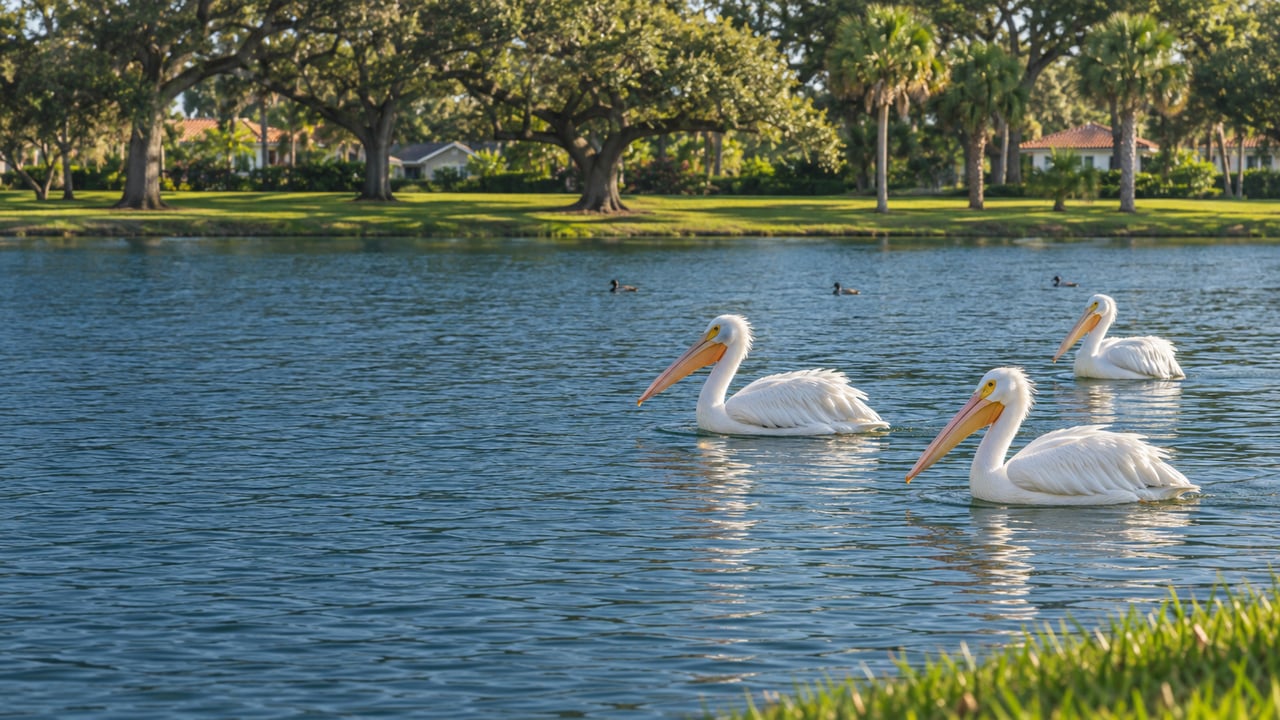
The American White Pelican is the bird people come to see. The most recent eBird report at the park is a single pelican logged on November 7, 2026, by John Ficken. According to Creative Loafing Tampa, white pelicans weigh up to 30 pounds and have wingspans up to nine feet. Each one eats about four pounds of fish a day. They hunt in groups, herding fish into a tight area and scooping them up with their pouches. Then they tend to move on to the next pond. At Crescent Lake, that means pelicans stop by for a while and then leave. Bay Soundings reported that the pelicans visiting Crescent Lake in winter find plenty of fish to eat there.
The rest of the season looks much the same. On a February 19 photo walk this year, Lenny Flank photographed a White Pelican, scaup, an Anhinga, a flock of White Ibis, a Great Blue Heron, a Moorhen, a Fish Crow and a cormorant, and noted that the park's new playground had just reopened. One more duck could turn up around the holiday. The park's most recent Hooded Merganser report is from November 25, 2025, which was Thanksgiving week last year.
The shoreline that keeps them fed
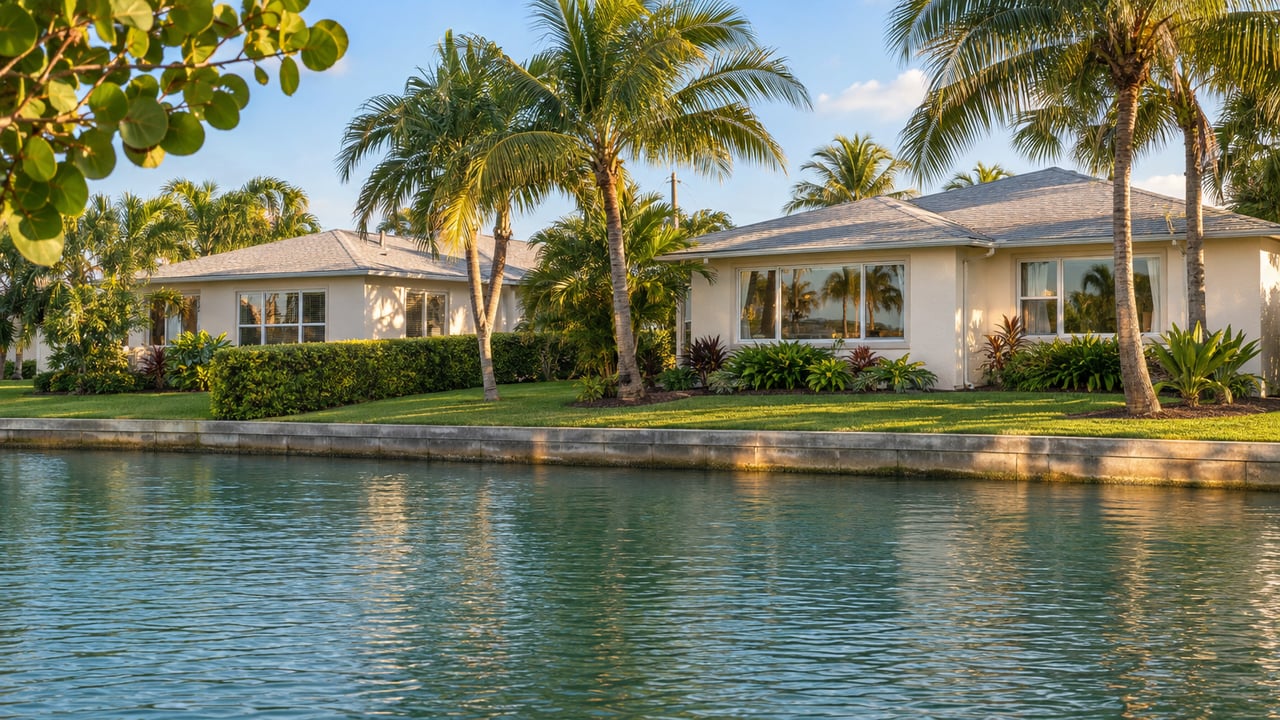
The plantings along the water's edge are a big part of why the birds keep coming. SoUL started in 2007 as Friends of Crescent Lake, with a Bay Mini-Grant from the Tampa Bay Estuary Program to plant wetland plants in the lake's shallows. The first plantings went in at the north and south ends, where stormwater outfalls had built up natural sediment deltas. The group has planted more than 25 native species over the years. The ones that survived include fire flag, bulrush, pickerelweed, canna lily and spatterdock. They now form a dense native shrub line along much of the lake's edge, where many kinds of birds nest.
The next project is underwater. SoUL wants to bring back submerged vegetation to support a healthier fish population, which right now is mostly non-native species such as tilapia. Volunteers wrapped eelgrass in soil and burlap, "like little burritos," as Bays put it, and dropped the bundles into the lake. "This year, with water levels dropping and clarity improving, we're seeing them all along the length of the berm," he told Bay Soundings.
The volunteers do this work by hand. SoUL's monthly cleanups at Crescent Lake draw between 20 and 100 people depending on the weather. Some walk the park picking up trash and clearing the Water Goats, the floating nets that catch litter. Others go out in canoes and kayaks and have pulled more than a ton of water lettuce at each of the last few cleanups. Lucy Trimarco has lived near the lake since 2002 and is SoUL's volunteer lake champion for Crescent. She told the Northeast Journal that when she arrived, nothing grew in the lake, the city sprayed pesticides along the shore, and algal blooms and fish kills came every few months. Today she calls it "our own Central Park."
Two December Saturdays, and an app for the rest of the season
The simplest way to learn the lake's winter birds is to walk it with someone who already knows them. The St. Petersburg Audubon Society has a Crescent Lake field trip on Saturday, December 12, 2026, from 8 to 10 a.m. It is aimed at beginning and intermediate birders, and everyone is welcome. John Ficken, who logged the November pelican, is leading it. The group meets at the TASCO parking lot at 15th Avenue North and 5th Street North. Spots are reserved through the chapter's Mobilize page, which is linked from the event listing. There are no restrooms. Bring a hat, binoculars, water, insect repellent and sunscreen.
One week later, on Saturday, December 19, the chapter runs the St. Petersburg Christmas Bird Count. Volunteers can join a counting team or watch a home feeder, and Eric Plage is the contact.
For the weekday walks in between, Mic McCarthy, field trip chair for the Tampa Audubon Society, told Creative Loafing that the eBird app works better on a phone than on a computer. "Using the eBird app on your phone lets you immediately see where your target bird was seen most recently, and then if you have Google maps installed, it will give you directions to get there," he said. Crescent Lake has its own eBird hotspot page, so you can check whether a pelican has been reported before you leave the house. If you see one, you can add your own sighting to the list.
If you own a home within walking distance of the TASCO lot and want to know what it's worth today, Marsh Bilby has been a Florida Certified Residential Appraiser since 1995 and prices homes around Crescent Lake with that same discipline. Get a Free Home Valuation and see where your number stands this winter.