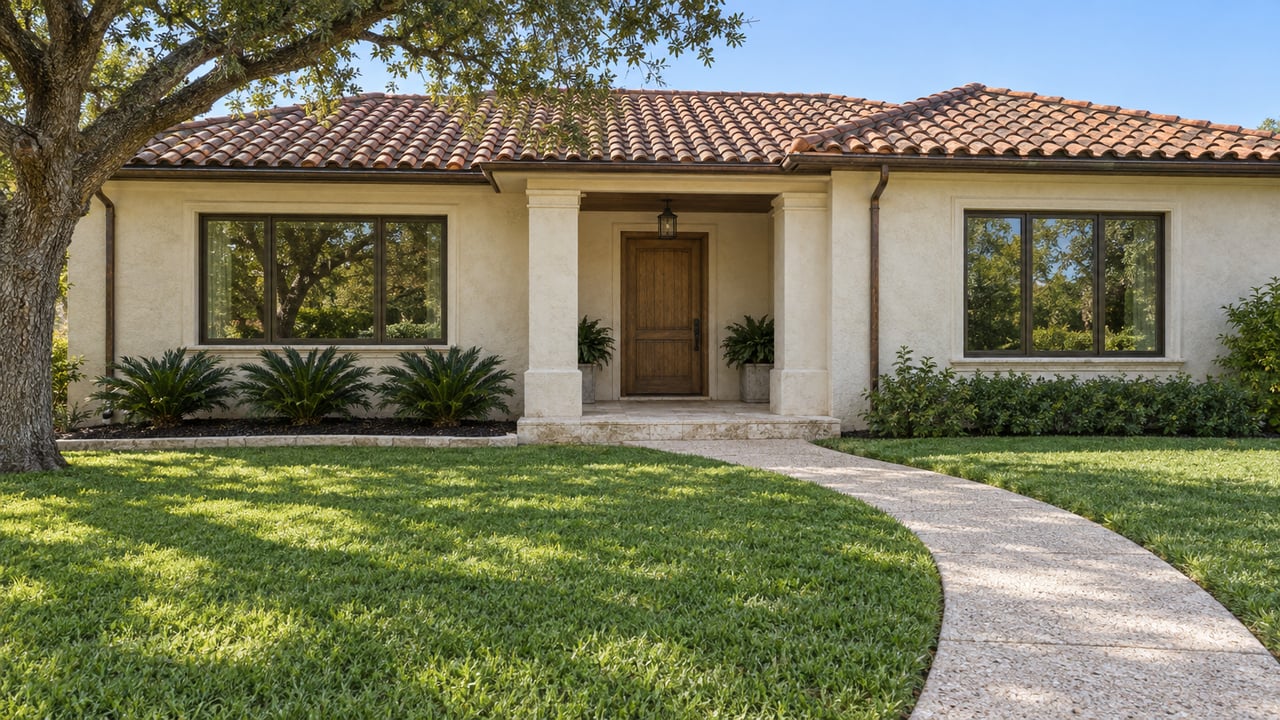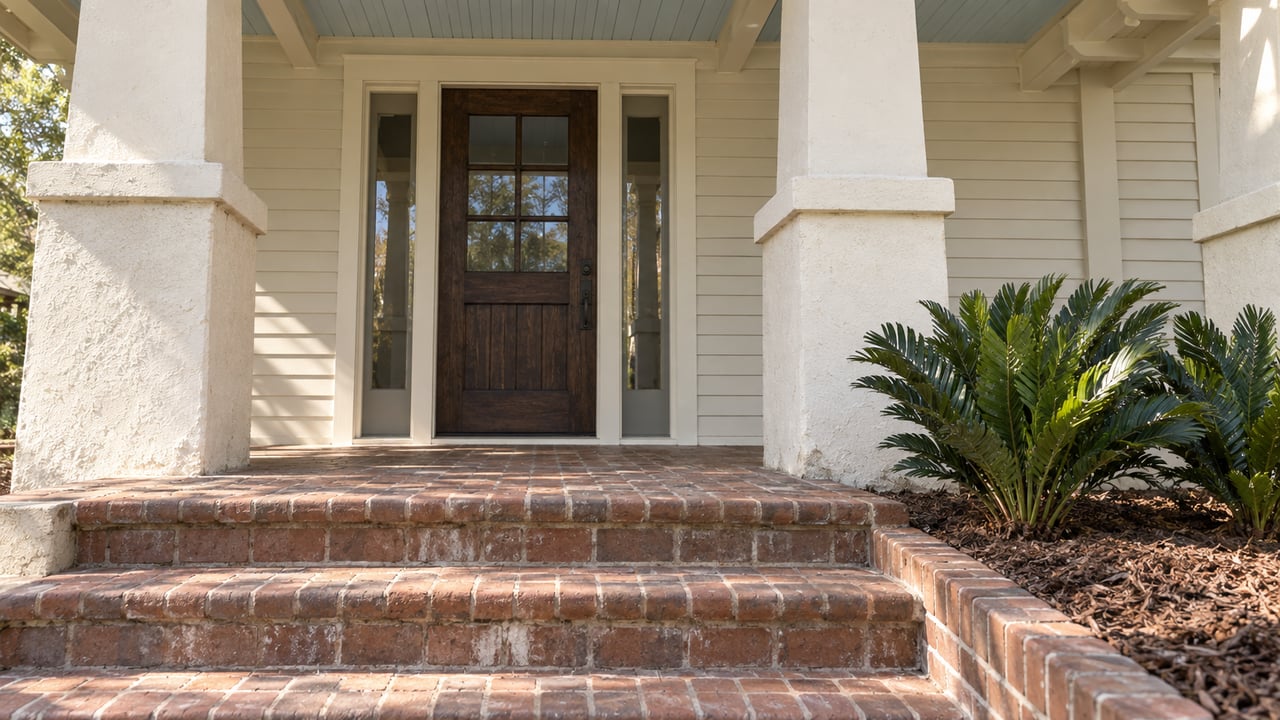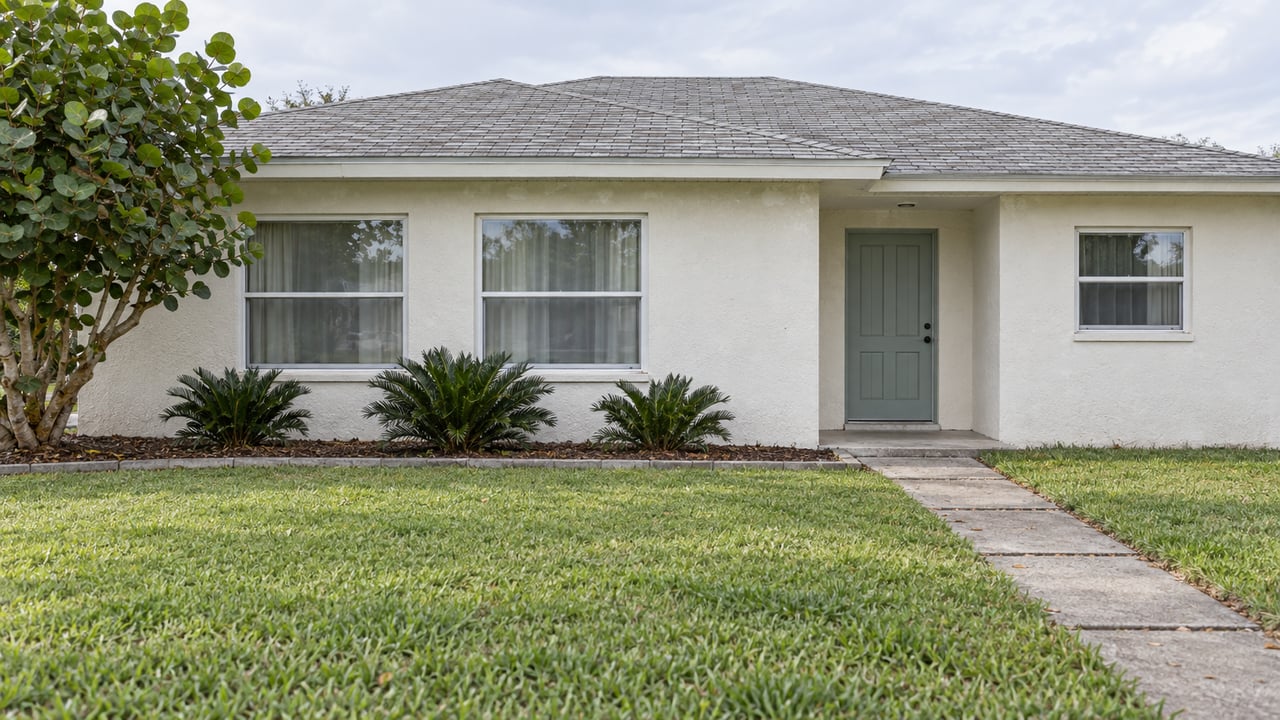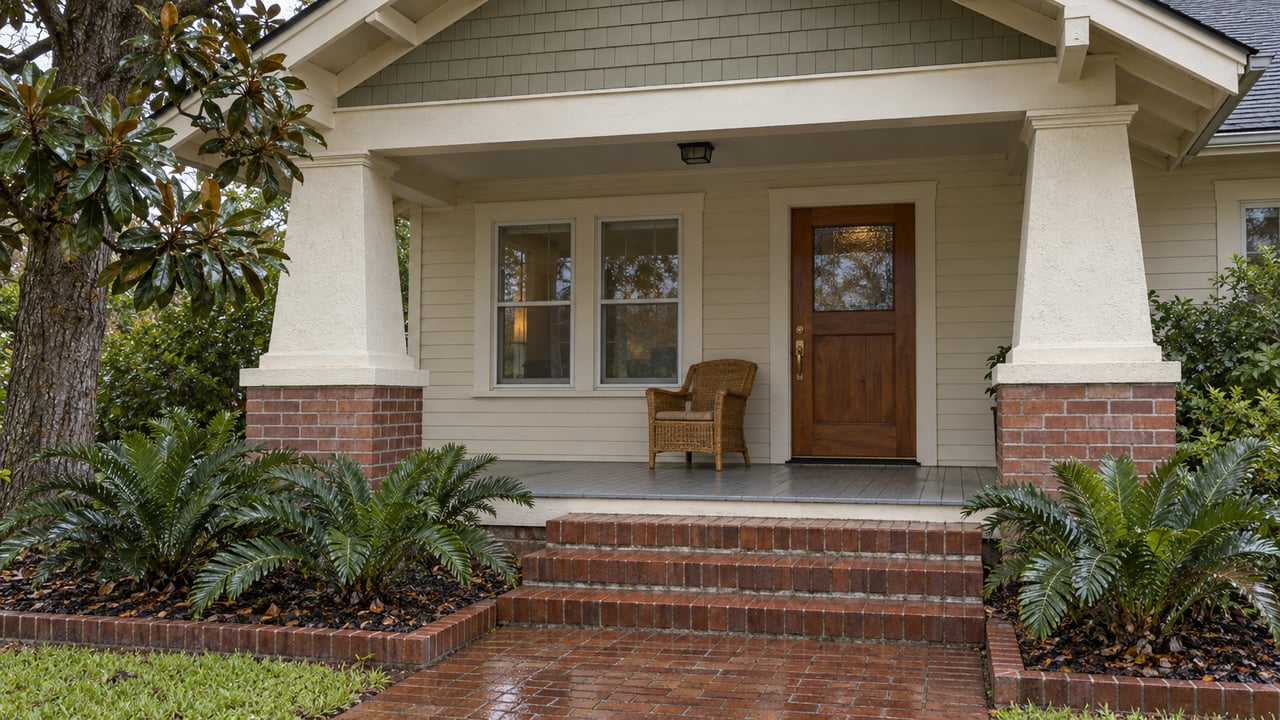
Every house between 4th Street North and Tampa Bay, from 5th Avenue North up to 30th Avenue North, sits inside a district on the National Register of Historic Places. According to the City of St. Petersburg, that listing alone puts no limits on what a private owner can do to the house. The rules a buyer would actually feel, like design review for an addition or a hearing before a demolition, apply to a much smaller set of properties: one district from 1988, three short block-level districts added in 2017 and 2018, and a list of individual landmarks.
The practical result is that the word "historic" in this neighborhood's name tells you very little about any one parcel. Two 1920s houses on neighboring streets can look equally historic and still face very different rules. For a buyer, that difference changes what the house is worth to them. It needs checking before the offer, because it won't show up in the listing photos.
Two registers share one neighborhood name
The neighborhood's National Register listing goes by another name. The National Park Service nomination calls it the North Shore Historic District, "also known as the Old Northeast Neighborhood." It was listed in February 2003. The city also keeps its own list, the St. Petersburg Register of Historic Places, and the city's page on historic preservation is clear that the two lists carry different weight.
| National Register listing | St. Petersburg Register, local designation | |
|---|---|---|
| Covers in Old Northeast | The whole North Shore Historic District | Specific districts and individual landmarks only |
| Limits on private alterations | None, unless federal money is involved | Changes reviewed through a Certificate of Appropriateness |
| Protection from demolition | None from the listing itself | "A degree of protection from unnecessary demolition" |
| Run by | National Park Service | City staff and the Community Planning and Preservation Commission |
Under Section 16.30.070 of the City Code, a local landmark or a property in a local historic district needs a Certificate of Appropriateness before any exterior alteration, new construction, demolition or relocation. Ordinary repair and maintenance may be exempt. Demolition faces a higher bar. The code says the purpose is to show that no feasible alternative exists. The Commission can't approve a demolition until the applicant shows the property has no reasonable beneficial use or, for a commercial or income-producing property, that the owner can't earn a reasonable return.
Where the local map actually lands
Here are the locally designated pieces of Old Northeast on the city's register, in the order they were designated.
- Vinoy Park Hotel, 501 Beach Drive NE, May 1986
- Granada Terrace Historic District, April 1988
- Boyce Guest House, 205 Sixth Avenue NE, March 1997
- Ridgely Residence, 600 Beach Drive NE, August 2009
- Pace Residence, 705 16th Avenue NE, May 2010
- Jones-Laughner Residence, 556 Beach Drive NE, June 2010
- Sargent House, 806 18th Avenue NE, May 2016
- 700 Block of 18th Avenue Northeast District, March 2017
- North Shore Section, 200 Block of 10th Ave. NE Local Historic District, November 2017
- North Shore Section, Welch's Mediterranean Row Local Historic District, April 2018
- Westminster Presbyterian Church, 126 11th Avenue NE, March 2020
Granada Terrace is the largest of these. In the city's design guidelines, it sits entirely within the North Shore Historic District, with a period of significance from 1923 to 1939 and Mediterranean Revival as its main style. The three districts added in 2017 and 2018 are each named for a single block or row. Look at how they appear on the register: one block of 18th Avenue NE, one block of 10th Avenue NE, one row of Mediterranean houses. Outside those lines, the house next door can fall under different rules.
Why the map is a patchwork
There is a reason the protected areas are scattered. In May 2026, St. Petersburg City Council passed a resolution honoring preservationist Robin Reed, and the Tampa Bay Times account of her work lays out the history. According to the Times, she joined the neighborhood association and led a campaign to make Old Northeast a "Local Historic District." In 2006 that campaign sought limits on building and demolition across the whole neighborhood, and the Times reports simply: "That effort failed."
The same article says that as past president of Preserve the Burg, Reed helped homeowners in Mirror Lake set up their own Local Historic District. Old Northeast never adopted local protection for the whole neighborhood. What it has is the 1988 district plus the protections added later, block by block and building by building. When council honored Reed, Council Chair Lisett Hanewicz said preservation is about "protecting identity, memory, and the character of a place that we call home," as the Times reported. Across most of Old Northeast, that character is protected by zoning and by owners' own choices, and the historic register doesn't play a role.
What an undesignated house carries instead
For a house outside the local districts and off the landmark list, a few separate rules apply.
Age alone triggers nothing. In the city's design guidelines, a building that reaches 50 years old does not take on any restrictions just for that, and it doesn't automatically qualify for incentives either.
A short delay applies only to listed properties. The same code section calls for a 30-day hold on processing a site plan that includes demolition, but only for a property the city's database flags as potentially eligible to be an individual local landmark. Commission members and community groups that have registered for notice are told about the application. The hold doesn't apply when the Building Official finds a building structurally unsafe, among other exceptions. The city publishes its list of potentially eligible properties as a PDF linked from its historic preservation page, and the code points to the city's property records database as the place where these flags are recorded, so ask the city about a specific address.
Zoning sets the size of anything built. St. Petersburg's residential code update was adopted as Ordinance 611-H and took effect July 18, 2025. It affects the Neighborhood Traditional districts, NT-1 through NT-4. The city's NT code summary caps residential floor area ratio at 0.50 in NT-1 and NT-4 and 0.40 in NT-2 and NT-3, with a bonus of up to 0.20 for certain compatible design features. Principal buildings are limited to 24 feet to where the roofline starts and 36 feet to the peak. The NT rules allow rehabilitation and redevelopment at neighborhood scale and don't ban demolition. Zoning is assigned parcel by parcel, so confirm which NT district applies to the specific address.
The incentive map uses different lines
The incentives explain why local designation can add value as well as limit it, and they follow different boundaries than the restrictions do.
The city's property owner programs page describes an Ad Valorem Tax Exemption for Historic Preservation. For ten years, it exempts the increase in city or county taxes that results from an approved renovation. Construction costs have to equal at least 10% of the property's assessed taxable value. The city must approve the project before work begins, and City Council approves the exemption after the work is done. The cap is $100,000 for a single-family home. That page says the program is open to individually listed properties or those "contributing to a historic district." The Florida Division of Historical Resources describes eligibility under state law as including contributing properties in National Register districts. If you own an undesignated house in North Shore and want to know whether it qualifies, ask city historic preservation staff directly. The program is in active use: on July 21, 2026, the Pinellas County Commission approved exemptions for two historic properties in St. Petersburg.
Two benefits are limited to individual local landmarks. A landmark is left out of the gross floor area calculation, and its owner can sell certain development rights through the Historic Transfer of Development Rights program. Contributing buildings in a National Register district can qualify for certain Florida Building Code exemptions that protect historic features.
Why this belongs in the price conversation
From a valuation standpoint, a house is worth what it can legally become, what it costs to change it, and what the houses around it are likely to stay. In Old Northeast, all three depend on where the parcel sits on the local map.
A house inside Granada Terrace comes with review for exterior changes and a high bar for demolition. The same rules apply to its neighbors, which makes the block more predictable. An undesignated house a few streets away gives its owner more freedom, and its neighbors have that same freedom. Neither one is automatically worth more. They are different properties, and comparing them on square footage and finishes alone leaves out a real factor.
The broader market makes these questions more pressing. In September 2026, the median sale price for Pinellas County single-family homes was $465,000, up 9.4% from September 2025. Active listings fell 14.2% to 3,129, and months of supply came in at 3.7. Those Pinellas REALTOR Organization figures cover the whole county, not Old Northeast alone. Even so, at those price levels, the question of what a specific lot allows involves a lot of money on either side of the table.
Before making an offer on an older Old Northeast house, check these:
- Look up the parcel on the city's Historic Preservation Map and see whether it is a local landmark or inside a local district.
- Ask the city whether the property is flagged as potentially eligible for local landmark designation.
- Confirm the parcel's NT zoning district before budgeting for an addition.
- If renovation is the plan, talk to city historic preservation staff about the tax exemption before any work starts, since approval has to come first.
A few quick answers
Does buying in Old Northeast mean I need city approval to change the windows? Only if the house is a local landmark or sits in a local historic district. National Register listing by itself does not restrict private alterations unless federal assistance is involved.
Could the neighborhood still become a local district? The 2006 campaign for the whole neighborhood failed, according to the Times, and the local designations since then have been single blocks, rows and buildings.
Where do the design rules for designated properties come from? The city's Design Guidelines for Historic Properties cover maintenance, additions, alterations and new construction, and include an appendix for each local district.
This post is general information about published city and state rules. It is not legal, tax or financial advice, so confirm how they apply to your property with the city and the right professional.
At Marsh Bilby, pricing an Old Northeast house starts with where the parcel falls on the historic map, because that affects what the property can become and what comparable sales actually mean. If you're weighing a purchase or a sale here, request a free home valuation that accounts for the parcel's designation status and zoning.